
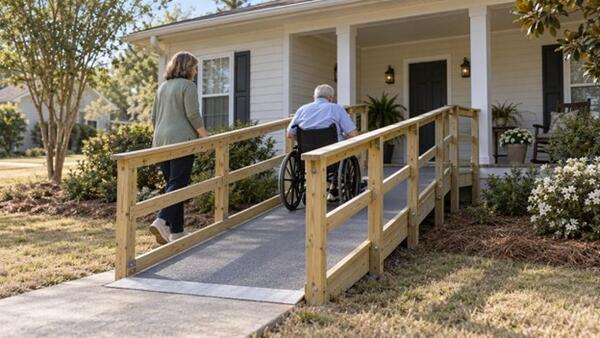
Can a Mississippi Truck Crash Claim Cover Home Accessibility Upgrades?
A disabling injury in a truck crash can leave you paying for care when your home’s entrance or bathroom no longer meets your needs. You can face accessibility costs before you’ve even left the hospital.
Short answer: Yes. A Mississippi truck crash claim may cover reasonable, medically supported changes to your home after an accident as economic damages, including work you’ll need in the future. Your recovery depends on evidence linking the work to crash-related injuries and establishing liability, along with your claim’s circumstances and the insurance that’s available.
This is general information and isn’t legal advice for your specific Mississippi claim.
How home modifications after an accident fit into damages
Economic damages cover measurable financial losses that you suffer because of an injury. Reasonable costs for home modifications after an accident may be sought alongside medical expenses and lost income, but recovery depends on the claim’s circumstances, including medical proof and cost estimates.
Each expense covers a different need. Medical bills cover treatment, while rehabilitation expenses cover therapy. Lost income represents the earnings you missed. Home health care pays for assistance; a wheelchair is equipment for mobility, while widening a doorway changes the building itself.
Renovation costs in a settlement
A personal injury settlement can cover disability-related home renovation costs, including future expenses when evidence supports them. You shouldn’t assume that every improvement you plan will make it into the settlement. Compare the work you’re proposing with your medical plan and itemized contractor estimates before you agree on an amount.
Accessibility work a claim may include
Modifications may qualify for compensation when they address limitations the injury caused or worsened, not your preferences for general remodeling. The work you propose should address a documented problem, such as trouble entering the house or transferring into a shower.
|
Modification |
Functional purpose |
Useful supporting proof |
|
Ramp |
Provide an entrance without steps |
Mobility assessment and site-specific contractor estimate |
|
Accessible shower |
Reduce barriers to bathing and transfers |
Therapist’s transfer assessment and proposed bathroom measurements |
|
Automatic door opener |
Allow entry with limited hand or arm function |
Documented strength limitations and installation estimate |
|
Handrails |
Provide support on steps |
Assessment of balance and the existing stairway |
|
Grab bars |
Provide support during toilet or shower transfers |
Therapist’s placement recommendations and installation estimate |
Heywood (2004) carried out the WHO-reviewed study. It reported that 62% of people whose homes were modified for accessibility felt safer from accidents, while 77% perceived a positive effect on their health. People’s reported perceptions don’t establish medical necessity for your particular bathroom renovation.
Adapting an older adult’s home
You can improve accessibility in an older adult’s home by matching the work to assessed daily needs, such as installing properly placed grab bars to help with difficult toilet transfers. Your medical and therapy records should separate needs you had before the injury from new or worsened limitations when you’re pursuing an injury claim.
Proof of necessity and reasonable cost
You may use medical recommendations, a functional home assessment, itemized contractor estimates, and evidence of projected care needs to support home modification costs. Each document should explain either why you need the work or how someone worked out the price.
Ask your treating clinician to link the limitation to the crash. An occupational therapist can document doorway widths and the trouble you have with transfers. Contractors should price the accessibility work you need separately from cosmetic extras, such as decorative tile.
Current work and future needs
A claim may cover future accessibility changes when medical evidence supports both the expected need and a reasonable estimate of the cost. A possible improvement that lacks medical support differs from a documented expectation that you’ll need wheelchair access.
Keep invoices and payment records for the work you’ve already completed. Obtain a written scope and estimated schedule for renovations you expect to need. A projected care plan should show how lasting limitations affect the proposed work, including the space you’ll need to bathe or get help from a caregiver.
Why Mississippi truck claims require a broader investigation
A Mississippi truck claim may involve the driver and the trucking company, along with a third party whose conduct contributed to the crash. You need evidence of each party’s conduct under Mississippi law and any applicable federal trucking rules to establish responsibility. Ask a Mississippi lawyer about filing deadlines as you gather the crash and carrier records.
The CDC reported approximately 214,110 traumatic-brain-injury-related hospitalizations in the United States in 2020 and 68,663 TBI-related deaths in 2023. These national figures include all causes of TBI, not just truck crashes in Mississippi.
A lasting brain or spinal cord injury may raise projected losses because you may need care and equipment for a longer time. A diagnosis by itself doesn’t establish a renovation budget. Medical projections should connect the expected impairment to specific needs, such as help with bathing and transfers.
Other questions during recovery
Speaking with an insurer
Stick to accurate facts, but don’t speculate about fault or say you’ve fully recovered until you know that’s true. Get legal advice before giving a recorded statement or accepting a settlement. Your own policy may require you to report the crash and cooperate, so check those obligations before declining a request.
When a home could be at risk
A home may be at risk of collection if a defendant owes a judgment beyond the available insurance coverage, subject to Mississippi exemptions. Bringing an injury claim doesn’t mean you owe a judgment. Ask a lawyer to evaluate any counterclaim and how you own your property.
Recognizing emotional distress
Nightmares and intrusive memories can indicate emotional distress; avoiding travel or persistent trouble sleeping can be signs, too. Seek a professional assessment if symptoms disrupt your daily life or keep you from attending therapy appointments.
Comparing the difficulty of trauma
No single type of trauma is the hardest for everyone to recover from. Its effects differ from person to person and depend on the circumstances. Describe your own symptoms at follow-up appointments rather than comparing your experience with someone else’s injuries.
Mental recovery timelines
Mental recovery after a crash has no fixed deadline. Some people’s symptoms may ease earlier, while others’ may continue. A clinician can assess ongoing distress and discuss treatment when fear interferes with your sleep or travel.
Preparing for a claim discussion
Preserve your records and arrange for professionals to evaluate your care and housing needs. Discuss the evidence and your claim’s specific deadlines with a qualified Mississippi lawyer before you settle. Any request for renovation costs should rely on documented disability-related needs rather than assumptions.