
Invisalign Treatment: How It Works and Why It Matters for Your Smile
Over 12 million patients worldwide have transformed their smiles using Invisalign clear aligners—a dramatic shift from just a decade ago when traditional metal braces dominated orthodontic treatment. According to the American Association of Orthodontists' 2024 report, nearly 75% of adults seeking orthodontic care now prefer clear aligner therapy over conventional braces, marking the most significant change in orthodontic preferences in modern history.
This preference shift isn't just about aesthetics. The rise of remote work, video conferencing culture, and social media has fundamentally changed how people think about their appearance during treatment. Adults who might have avoided orthodontic care entirely are now seeking solutions that won't disrupt their professional image or lifestyle. Yet despite Invisalign's popularity, many patients still don't understand the sophisticated technology behind these seemingly simple plastic trays—or how to maximize their treatment outcomes. Consulting a provider for Invisalign treatment in Colonia can help ensure your aligners are used effectively for optimal results.
The stakes are higher than many realize. Poor understanding of how Invisalign works can lead to treatment delays, suboptimal results, or even treatment failure. When patients don't grasp the biomechanics involved or underestimate the importance of compliance, what should be an 18-month journey can stretch to 24 months or longer. Here's what the latest research reveals about how Invisalign actually works and why understanding the science matters for your smile transformation.
What Is Invisalign Treatment and Its Core Principles?
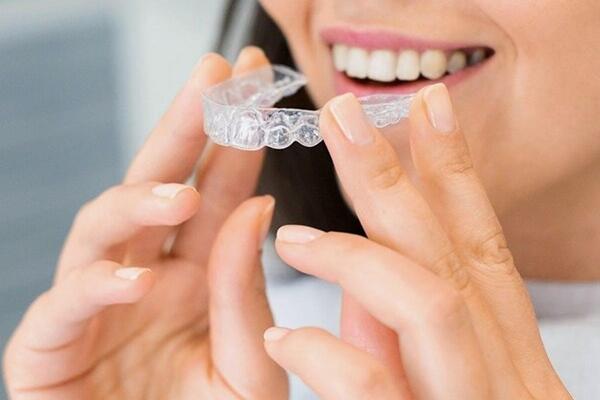
Invisalign represents a fundamental shift in how orthodontists approach tooth movement, replacing the continuous force application of traditional braces with a series of precisely calculated, incremental movements. Rather than using metal brackets and wires that apply constant pressure, Invisalign employs a sequence of custom-made, clear plastic aligners that each move teeth in small, controlled increments—typically 0.25 millimeters per aligner.
The core principle behind Invisalign lies in controlled tooth movement through what orthodontists call "staged tooth movement." Each aligner in your series represents a specific stage in your treatment plan, designed using sophisticated computer algorithms that map the precise path each tooth needs to travel from its current position to its final destination. This isn't guesswork—it's biomechanical engineering applied to orthodontics.
What makes Invisalign particularly effective is its predictability. Unlike traditional braces where adjustments happen every 6-8 weeks during office visits, your entire treatment sequence is planned digitally before you receive your first aligner. This means your orthodontist can visualize potential challenges, adjust the treatment plan accordingly, and even show you a digital preview of your final results before treatment begins.
The treatment works best for patients who can commit to wearing aligners 20-22 hours daily and maintain excellent oral hygiene throughout treatment. Most candidates are teens and adults with mild to moderate orthodontic issues, including crowded teeth, gaps, overbites, underbites, and crossbites. However, complex cases involving significant jaw repositioning or severe tooth rotations may still require traditional braces or additional orthodontic appliances.
How Does Invisalign Treatment Work Step-by-Step?
Customization and Digital 3D Planning
Your Invisalign journey begins with advanced digital scanning technology that captures precise measurements of your teeth and jaw structure. Gone are the days of uncomfortable dental impressions—modern orthodontic practices use intraoral scanners that create detailed 3D models of your mouth in minutes. These scans feed into Invisalign's proprietary ClinCheck software, which has analyzed treatment data from millions of previous cases to optimize your specific treatment plan.
The digital planning phase represents the most critical component of successful Invisalign treatment. Your orthodontist collaborates with Invisalign's treatment planning specialists to map every tooth movement, determining not just where each tooth needs to end up, but the precise sequence of movements to get there safely. This process considers factors like root anatomy, bone density, and the biomechanical properties of tooth movement that most patients never see.
What's remarkable is the level of customization involved. Your aligners aren't just shaped differently—they're programmed with specific pressure points called attachment sites where small, tooth-colored composite buttons may be bonded to certain teeth. These attachments act as handles, allowing aligners to grip teeth more effectively and control complex movements like rotations or intrusions that would be difficult with smooth plastic alone.
Biomechanics of Tooth Movement with Invisalign Aligners
Understanding how Invisalign moves teeth requires grasping some basic orthodontic biology. Your teeth sit in sockets surrounded by the periodontal ligament, a thin layer of connective tissue that responds to pressure by triggering bone remodeling. When an Invisalign aligner applies gentle, consistent pressure to a tooth, it compresses the periodontal ligament on one side while stretching it on the other.
This pressure differential triggers a cascade of cellular activity. On the compression side, cells called osteoclasts begin dissolving bone tissue, creating space for the tooth to move. Simultaneously, on the tension side, osteoblasts start laying down new bone to fill the space left behind. This process, called bone remodeling, is why tooth movement takes time—you're literally reshaping the bone structure supporting your teeth.
Invisalign's genius lies in applying just the right amount of force. Too little pressure won't trigger bone remodeling; too much can damage the periodontal ligament or cause root resorption. The clear aligners are engineered to provide approximately 50 grams of force per tooth—enough to stimulate healthy bone remodeling without causing harm. This is why each aligner moves teeth only 0.25mm: it represents the maximum safe distance teeth can move in the typical two-week wearing period.
Stepwise Treatment Stages and Typical Duration
Most Invisalign treatments involve 20-40 aligners per arch, with each aligner worn for 1-2 weeks depending on your orthodontist's protocol and your individual response to treatment. The total duration typically ranges from 12-24 months, though this varies significantly based on case complexity and patient compliance. Simple spacing corrections might finish in 6-8 months, while comprehensive treatments involving significant tooth rotations or bite corrections can extend to 18-24 months.
The treatment unfolds in predictable phases. Initial aligners focus on alignment and leveling—correcting crowding and creating space for proper tooth positioning. Middle-stage aligners handle more complex movements like rotations, torque corrections, and space closure. Final aligners fine-tune tooth positions and optimize your bite relationship, a phase called finishing and detailing.
What many patients don't anticipate is that Invisalign treatment often involves refinement stages. After completing your initial series of aligners, your orthodontist may recommend additional aligners to perfect specific tooth positions or address any tracking issues that developed during treatment. This isn't treatment failure—it's precision optimization, ensuring your final result meets the exacting standards of modern orthodontics.
Types of Invisalign Treatment and Patient Categories
Invisalign offers several treatment variations designed to address different orthodontic needs and patient preferences. Invisalign Comprehensive represents the full treatment system, suitable for complex cases requiring extensive tooth movement, bite correction, or treatment duration exceeding 12 months. This version provides unlimited aligners and refinements within a designated treatment period, giving orthodontists maximum flexibility to achieve optimal results.
For less complex cases, Invisalign Express and Invisalign Lite offer streamlined treatment options. Express treatments typically involve 5-7 aligners and target minor spacing or alignment issues that can be resolved in 3-6 months. Lite treatments use up to 14 aligners for cases requiring moderate correction, making them cost-effective options for patients with specific, limited orthodontic needs.
Invisalign First and Invisalign Teen address the unique challenges of treating younger patients. Invisalign First is designed for children with mixed dentition (both baby and permanent teeth), incorporating special features to guide proper eruption of permanent teeth. Invisalign Teen includes compliance indicators—small blue dots that fade with proper wear—helping parents and orthodontists monitor whether teenagers are wearing their aligners consistently.
Age considerations significantly impact treatment planning and outcomes. Adult patients often present with more complex cases involving previous orthodontic treatment, missing teeth, or existing dental work like crowns and bridges. These factors require careful treatment planning and may necessitate interdisciplinary care involving general dentists, periodontists, or oral surgeons. Teenagers and young adults typically respond faster to treatment due to more active bone metabolism, but compliance challenges can offset this biological advantage.
Invisalign Compared to Traditional Braces and Other Orthodontic Treatments
The choice between Invisalign and traditional braces often comes down to case complexity, patient lifestyle, and treatment goals. Traditional metal braces excel at complex movements requiring precise control, particularly cases involving significant vertical tooth movement, severe rotations, or major bite corrections. The continuous force application and three-dimensional control offered by brackets and wires remain unmatched for certain orthodontic challenges.
Invisalign's advantages become apparent in adult-focused treatment scenarios. The aesthetic benefit is obvious, but equally important is the impact on oral hygiene. Patients can remove aligners for thorough brushing and flossing, maintaining better periodontal health throughout treatment. This is particularly crucial for adults who may already have compromised gum health or increased susceptibility to tooth decay.
Treatment comfort represents another significant differentiator. While both treatments involve discomfort as teeth move, Invisalign patients typically experience less acute pain and fewer soft tissue injuries. The smooth plastic aligners don't have sharp edges or protruding wires that can irritate cheeks and lips—a common complaint with traditional braces, especially among adult patients who haven't adapted to orthodontic appliances.
The emergence of direct-to-consumer aligner companies has complicated the treatment landscape, offering mail-order aligners without orthodontic supervision. While these options may seem convenient and cost-effective, they lack the diagnostic expertise, treatment monitoring, and emergency care that traditional orthodontic practice provides. Research from the Journal of Clinical Orthodontics indicates significantly higher rates of treatment complications and suboptimal outcomes with unsupervised aligner therapy.
Research and Clinical Evidence on Invisalign Effectiveness
Clinical research consistently demonstrates Invisalign's effectiveness for appropriate cases, with success rates exceeding 90% when treatment plans align with the system's capabilities. A comprehensive study published in the *American Journal of Orthodontics and Dentofacial Orthopedics* analyzed treatment outcomes across 3,000 Invisalign cases, finding that predictability of tooth movement varied by type of movement attempted.
The research reveals that Invisalign excels at certain movements while facing limitations with others. Simple tipping movements—moving the crown of a tooth while keeping the root relatively stable—achieve 85-95% predictability. Bodily translation (moving the entire tooth) reaches 70-80% predictability, while root torque (changing the angulation of tooth roots) achieves approximately 60% predictability. These findings have led to improved attachment designs and force systems that enhance treatment outcomes.
Patient satisfaction surveys consistently rate Invisalign highly, with 96% of patients reporting they would recommend the treatment to others. Key satisfaction drivers include aesthetic appeal during treatment, minimal impact on daily activities, and the ability to maintain normal oral hygiene routines. However, the same research identifies compliance as the primary factor determining treatment success, with patients wearing aligners less than 20 hours daily experiencing significantly longer treatment times and less predictable outcomes.
Long-term stability studies indicate that Invisalign-treated cases demonstrate retention success rates comparable to traditional orthodontic treatment when appropriate retention protocols are followed. The key insight from this research is that the method of tooth movement matters less than the quality of treatment planning, case selection, and post-treatment retention strategies employed by the orthodontist.
Common Challenges and Best Practices for Invisalign Wear and Maintenance
Patient compliance represents the single greatest challenge in Invisalign treatment success. Unlike traditional braces that work continuously, Invisalign effectiveness depends entirely on consistent wear. Research shows that patients who remove aligners for more than 4 hours daily experience treatment delays averaging 30-40% longer than planned treatment times.
The most successful patients develop structured routines around aligner wear. Best practices include removing aligners only for meals and oral hygiene, carrying aligner cases to prevent loss or damage, and using aligner removal tools to avoid unnecessary stress on attachments or the aligners themselves. Tracking issues—when teeth don't move as predicted—often stem from insufficient wear time or poor aligner seating.
Speech adaptation typically occurs within 2-3 days as patients adjust to speaking with aligners in place. Some patients experience temporary changes in pronunciation, particularly with "s" and "th" sounds, but persistent speech issues are rare. Reading aloud during the initial adaptation period can accelerate the adjustment process.
Maintaining oral hygiene with Invisalign requires diligence but offers significant advantages over fixed braces. Patients should brush teeth after every meal before reinserting aligners to prevent bacterial growth and staining. Aligner cleaning involves gentle brushing with soft-bristled toothbrushes and lukewarm water, avoiding hot water that can warp the plastic or harsh chemicals that can cloud the material.
Pain management strategies focus on timing and over-the-counter medications. Most patients experience mild discomfort for 2-3 days after switching to new aligners, typically managed with ibuprofen or acetaminophen. Switching to new aligners before bedtime allows patients to sleep through the initial adjustment period when discomfort is most noticeable.
Frequently Asked Questions and Future Trends in Invisalign Technology
How long do I need to wear each set of aligners? Most orthodontists prescribe 1-2 week intervals, but this varies based on individual response and case complexity. Some patients may advance weekly, while others require longer intervals for optimal tooth movement. Your orthodontist will monitor your progress and adjust the schedule accordingly.
Can I eat and drink with aligners in place? Water is the only beverage safe to consume while wearing aligners. All other drinks, including coffee, tea, and sports drinks, should be consumed with aligners removed to prevent staining and bacterial growth. Food consumption always requires aligner removal to prevent damage and maintain oral hygiene.
What happens if I lose an aligner? Contact your orthodontist immediately for guidance. Depending on timing and circumstances, you might continue wearing the previous aligner, advance to the next set, or require replacement aligners. Having backup aligners or maintaining the previous set can help manage such situations.
Technological advancements continue expanding Invisalign's capabilities. Recent innovations include SmartTrack material that provides more consistent force application and improved tooth movement predictability. SmartForce attachments use advanced geometry to enhance control over complex movements, while precision wings help correct bite relationships more effectively.
The future of clear aligner therapy points toward artificial intelligence integration in treatment planning, with machine learning algorithms analyzing successful treatment patterns to optimize individual cases. Accelerated treatment protocols using photobiomodulation or micro-osteoperforations may reduce treatment times by 30-50%, while smart aligner technology could provide real-time feedback on wear compliance and treatment progress.
As orthodontic technology evolves, Invisalign continues adapting to address its traditional limitations while maintaining the aesthetic and lifestyle advantages that have made it the preferred choice for millions of patients worldwide. The key to success remains unchanged: proper case selection, meticulous treatment planning, and committed patient participation in the treatment process.