
Personal Care Home or Personal Care at Home: Sorting Out Senior Options in King of Prussia
Type "personal care" and "King of Prussia" into a search bar and the results mix two very different things. Some listings are residences where a parent would move in. Others are agencies that send a caregiver to the house. Families often don't realize they're looking at separate categories, with separate licenses, costs and trade-offs, until they've already toured three buildings.
Pennsylvania uses "personal care home" as a specific legal term. Under 55 Pa. Code Chapter 2600, a personal care home is a licensed residence that provides housing, meals, supervision and help with daily tasks for four or more adults who aren't related to the operator. The state Department of Human Services licenses and inspects more than 1,000 of them, ranging from converted houses to buildings with several hundred residents. Since 2011, a personal care home can't market itself as "assisted living" unless it also holds an assisted living residence license under Chapter 2800.
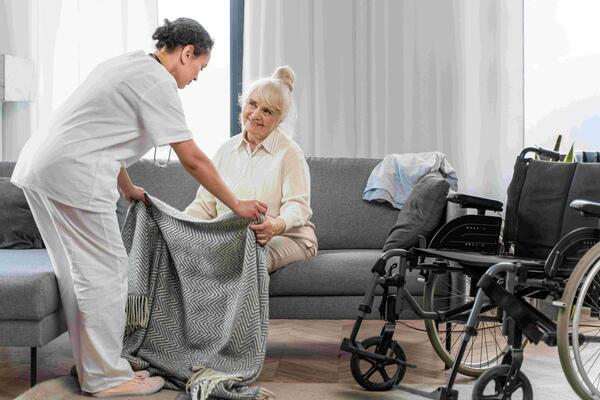
The other path is King of Prussia personal care delivered in a senior's own house or apartment by a licensed home care agency. The hands-on help looks much the same, from bathing and dressing to medication reminders, and the senior keeps their own kitchen, neighbors and daily routine.
What Each Option Includes
A personal care home bundles everything into a monthly fee: a room, three meals a day, housekeeping, activities, staff on site around the clock and help with personal care. The state describes these homes as serving people who can't live safely on their own but don't need nursing facility care, so residents don't receive 24-hour nursing. Some homes use shared bedrooms, so ask early if a private room matters to your parent.
Assisted living residences sit one step up. They offer the same services, can serve people with somewhat higher care needs and provide private living units that resemble small apartments.
In-home personal care builds around the senior's existing life. A caregiver arrives for a set number of hours, anywhere from a short morning visit to live-in care, and helps with:
- Bathing, showering and grooming
- Dressing and undressing
- Toileting and incontinence care
- Safe transfers from bed, chair and car
- Medication reminders
- Meal preparation and feeding help when needed
- Walking support and fall prevention around the house
- Changing linens and light housekeeping tied to care
Families can raise hours after a hospital stay and reduce them once a parent regains strength. A residence can't flex that easily.
Side-by-Side Comparison
Here's how the three options line up in Pennsylvania.
|
Factor |
Personal care home |
Assisted living residence |
Personal care at home |
|
State license |
Department of Human Services, Chapter 2600 |
Department of Human Services, Chapter 2800 |
Department of Health home care agency license |
|
Where care happens |
In the residence |
In the residence |
In the senior's own home |
|
Living space |
Private or shared room |
Private living unit |
The senior's existing home |
|
Staffing |
Staff on site 24 hours |
Staff on site 24 hours |
Caregiver present during booked hours |
|
Typical cost |
Monthly fee, often below assisted living rates |
About $6,100 a month (2024 statewide median) |
About $34 an hour (2024 statewide median) |
|
Main payment sources |
Mostly private pay, with a state SSI supplement for some low-income residents |
Mostly private pay |
Private pay, long-term care insurance, Community HealthChoices |
The cost row hides the real comparison, which depends on hours. Four hours of in-home care every day comes to about 120 hours a month, or roughly $4,100 at the median rate from the Genworth and CareScout 2024 Cost of Care Survey. Eight hours a day doubles that to around $8,200, above the assisted living median. Families whose parent needs help mostly in the morning and evening usually find home care cheaper, while those who need someone present overnight usually find a residence costs less.
When Staying Home Makes More Sense
Home care tends to work best for a senior who can stay safely alone for stretches of the day, with help concentrated around predictable tasks like the morning shower, getting dressed and dinner. It suits people with a strong attachment to their house or neighborhood, a spouse who still lives with them, or a pet that a residence won't accept. It also handles short-term needs well, such as six weeks of help after a knee replacement, with no residency agreement to sign.
It keeps options open, too. Many King of Prussia families use in-home personal care as a bridge while they research continuing care retirement communities, wait for an opening at the one they prefer or sell the family house. Starting at home gives everyone time to see how much help a parent really needs before making a move that's hard to reverse.
When a Residence Is the Better Call
Some needs point clearly toward a personal care home or assisted living. Nighttime wandering, repeated falls when nobody is around, or confusion that makes it unsafe to be alone for even an hour all call for supervision around the clock. Arranging 24-hour coverage at home is possible, but at about $34 an hour it runs past $24,000 a month, several times the residential rates.
Isolation is another signal. A parent who lives alone, no longer drives and goes most days without a conversation may do better in a building with a dining room, scheduled activities and people nearby. Honestly, some seniors who fight the move hardest end up happier afterward simply because lunch comes with company.
How to Check Either Option Before You Commit
For residences, the Department of Human Services posts personal care home and assisted living inspection reports online, along with each home's size and licensing status. Read the most recent reports, then visit in person. The state's own guidance suggests asking how long staff have worked at the home and watching how they speak to residents.
For home care agencies, confirm the Department of Health license, ask how caregivers are screened and trained, and find out how often a supervisor visits to review the care plan. Ask whether the same caregiver will come every time, since a familiar face makes bathing and dressing far less stressful for an older adult.
Montgomery County Aging and Adult Services, the area agency on aging for King of Prussia and the rest of the county, can run a needs assessment that gives families an outside opinion on which level of care fits. That assessment is worth getting before signing anything, because the two commitments unwind very differently. A home care schedule can usually be changed with a phone call, while leaving a residence typically involves notice periods and fees written into the admission agreement.